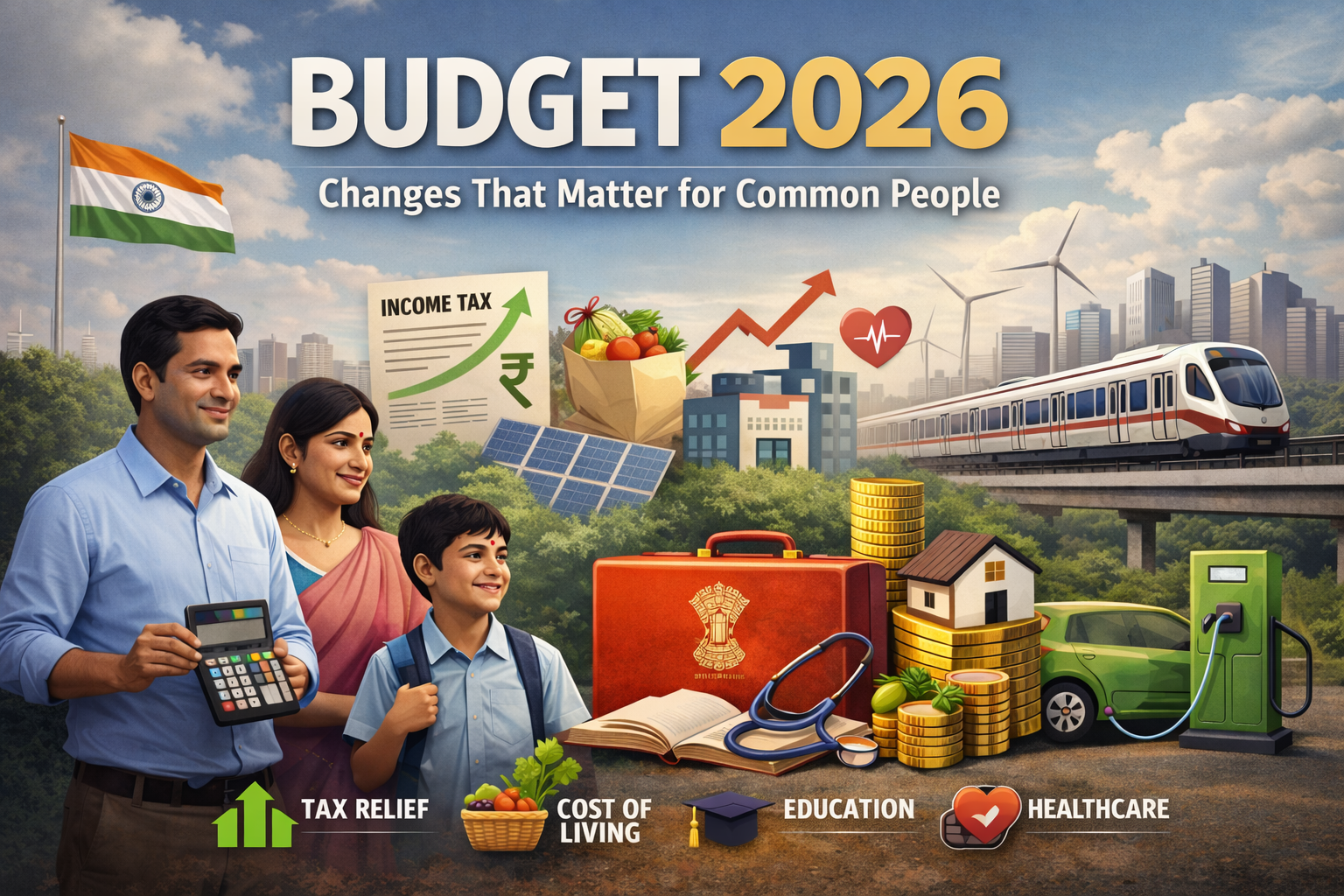
Budgets often feel complicated. There are long speeches, big numbers, and technical terms that most people don’t have the time or energy to decode. But behind all this, a simple question matters the most. How does the budget change the daily life of an ordinary person?
Budget 2026 arrived at a moment when people wanted clarity and relief. Prices have been rising, job markets are shifting, and salaries are not keeping pace with household expenses. This year’s budget tried to address some of these pressures, though not everyone will feel the impact the same way.
This blog breaks everything down in a clear and practical way. No jargon. No political angles. Just what truly matters to the common person.
1. A Quick Look at the Budget Mood
Budget 2026 carried a mixed tone. It aimed to focus on stability, moderate relief, and long-term growth. It wasn’t a “big surprise” budget, but it wasn’t dull either. Instead, the government chose a middle path.
For a common citizen, this means you may not see sudden or dramatic changes, but you will notice smaller improvements in important areas like taxation, ease of living, digital services, and subsidies.
The biggest relief is that the budget did not introduce additional financial burden on households at a time when families are worried about rising costs.
2. Income Tax Updates That Affect You
Tax announcements are usually the part people care about the most. Budget 2026 did not overhaul the tax system, but it introduced practical adjustments that can give some breathing room.
Standard Deduction Enhanced
One of the biggest changes is the increase in standard deduction. This is a direct benefit for salaried employees because it reduces taxable income without needing complicated paperwork.
For many middle-class families, this translates to a slightly lower tax outflow or more savings at the end of the year.
Simplified Tax Regime Improvements
The government continued its push for a simpler tax regime. A few more exemptions and deductions were neutralized into the system automatically. While not everyone may find this shift comfortable, it does make tax filing easier for people who prefer fewer complications.
Better Refund Processing
Though small, the move to shorten refund timelines matters a lot. Faster refunds mean faster access to your own money.
Impact Summary for Common People
- Slight increase in take-home salary
- Less paperwork
- Easier tax filing
- Better refund experience
Not a dramatic tax revolution, but enough to improve the financial experience of a normal taxpayer.
3. Changes That Affect Daily Living Costs
This is where people feel the budget most directly. Groceries, fuel, electricity, and essential services all influence monthly expenses. Budget 2026 introduced mixed updates that will ease pressure in some areas and tighten it in others.
Focus on Food Price Stability
The government announced measures to strengthen supply chains and support farmers in high-demand crops. This won’t bring instant price drops, but it helps reduce sudden spikes in essentials like vegetables, pulses, and grains.
Incentives for Domestic Manufacturing
Encouraging production within India generally helps control prices of electronics, home appliances, and everyday gadgets. If implemented smoothly, the cost of smartphones, chargers, laptops, and small appliances may stabilize or become slightly cheaper.
Import Duty Adjustments
Some import duties were reduced, especially on components used in manufacturing. This indirectly benefits consumers because companies can pass on reduced costs.
Focus on Affordable Housing
Subsidies and interest support for first-time home buyers continue. Renting may also become slightly more manageable as the budget focuses on increasing housing stock.
Impact Summary
- Controlled inflation for essential food items
- Electronics and appliances may become more affordable
- Support for new home buyers
- Better price stability in the coming months
Overall, the budget tries to reduce pressure on households that have been struggling with rising costs.
4. Education and Skill Development: What Families Should Know
Education is a major expense for most families. Budget 2026 placed strong emphasis on improving access to digital learning, skill programs, and job-ready training.
National Digital Learning Expansion
The government invested more in online education platforms, local-language learning content, and AI-based support tools. This makes quality learning accessible, especially for students who cannot afford expensive coaching.
Skill Development for Youth
New funds were allocated to vocational training, advanced digital skills, green jobs, and startup incubation. The goal is to help young people align with modern job markets.
Scholarships and Financial Aid
The budget increased the pool for need-based scholarships. This will support students from lower and middle-income families who want to pursue higher education.
Impact Summary
- More affordable learning options
- Skill programs that improve job opportunities
- Better access to scholarships
- Stronger support for career-focused training
For families with students, these changes offer long-term value.
5. Healthcare Improvements That Affect Every Household
Healthcare is one of the most sensitive areas for common people. Treatment costs keep rising, and even a basic medical emergency can strain a family’s savings. Budget 2026 made several announcements with the goal of reducing this burden.
More Affordable Medicines and Diagnostics
The government expanded price caps on essential drugs and common diagnostic tests. This directly reduces costs for families with ongoing medical needs.
Public Health Infrastructure Boost
More funds were allocated to primary health centers, district hospitals, and telemedicine networks. Better infrastructure means easier access and reduced wait times for basic treatments.
Insurance Coverage Expansion
Efforts were made to include more families in government-backed health insurance schemes. This helps reduce out-of-pocket spending.
Impact Summary
- Cheaper essential medicines
- Lower diagnostic costs
- Better access to government hospitals
- Wider insurance coverage for families
These changes offer steady relief instead of big one-time announcements.
6. Transport, Mobility, and Everyday Convenience
Daily travel is a part of life for millions. Budget 2026 introduced improvements that aim to make transportation smoother and more affordable.
Cheaper Urban Transport
Funds for metro projects, electric buses, and improved last-mile connectivity will help reduce travel time and cost for city commuters.
Road Infrastructure Push
Highway expansion continues. Better roads not only improve travel but also reduce logistics costs, which influences product prices.
Electric Vehicle Support
EV incentives were upgraded, making two-wheelers and small EVs more accessible. For middle-class families considering EVs to cut fuel costs, this is a helpful move.
Impact Summary
- Better public transport
- Reduced fuel and maintenance costs
- Lower logistics cost affecting product prices
- EV options becoming more practical for families
Travel is becoming more efficient and affordable over time.
7. Digital Services and Ease of Living
Digital improvements may not always look dramatic, but they save time, reduce stress, and make everyday tasks simpler.
Faster Digital Government Services
The budget expanded digital processes across taxes, certificates, subsidies, pensions, and grievance systems.
Stronger Cybersecurity and Data Safety
With increasing digital dependency, the focus on data protection is important for every citizen.
Simplified Banking and Payment Systems
UPI, digital wallets, and online banking will become smoother, safer, and accessible in rural areas too.
Impact Summary
- Faster paperwork
- Safer online transactions
- Better access to government benefits
- More secure digital environment
These changes make everyday life less stressful for common people.
8. Support for Jobs, MSMEs, and Self-Employed Individuals
A large part of India depends on small businesses, self-employment, and gig work. Budget 2026 introduced measures that aim to support job creation and entrepreneurship.
Lower Compliance Burden
Small businesses often struggle with complicated paperwork. The budget simplified filings and reduced penalties for minor delays.
Credit Support for MSMEs
Easier loan access helps small businesses stay afloat and create more jobs.
Support for Freelancers and Gig Workers
The budget introduced guidelines and protection frameworks for gig workers. This is important as platforms like delivery services, ride apps, and freelancing portals continue to grow.
Impact Summary
- More job opportunities
- Easier access to loans
- Better protections for gig workers
- Lower cost of starting or running a small business
This supports families who depend on business income.
9. Final Thoughts: What the Budget Means for Everyday Life
Budget 2026 did not aim for big fireworks. Instead, it focused on stability, small but meaningful improvements, and long-term support. For common people, the budget brings:
- Slight tax relief
- Better price stability
- Affordable digital and educational access
- Reduced healthcare burden
- Improved public transport
- More support for jobs and small businesses
- Faster digital services
It is not a perfect budget. No budget ever is. But it does address many everyday issues that matter to families trying to manage rising costs and uncertain job markets.
In simple terms, Budget 2026 tries to provide steady relief rather than dramatic changes. The impact will grow over the year, especially in areas like healthcare, education, and digital services.
For the common person, the changes may feel gradual, but they move in the right direction.